
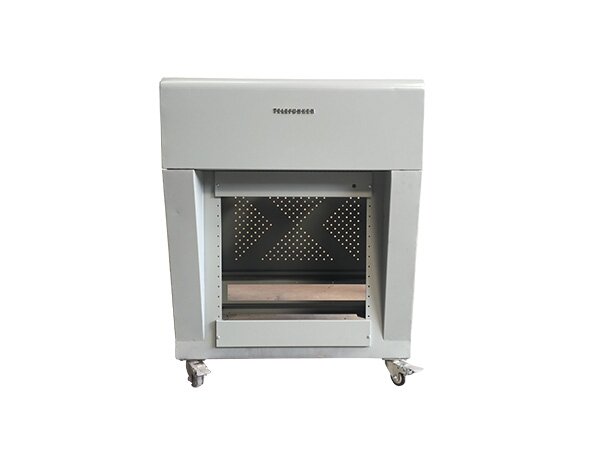
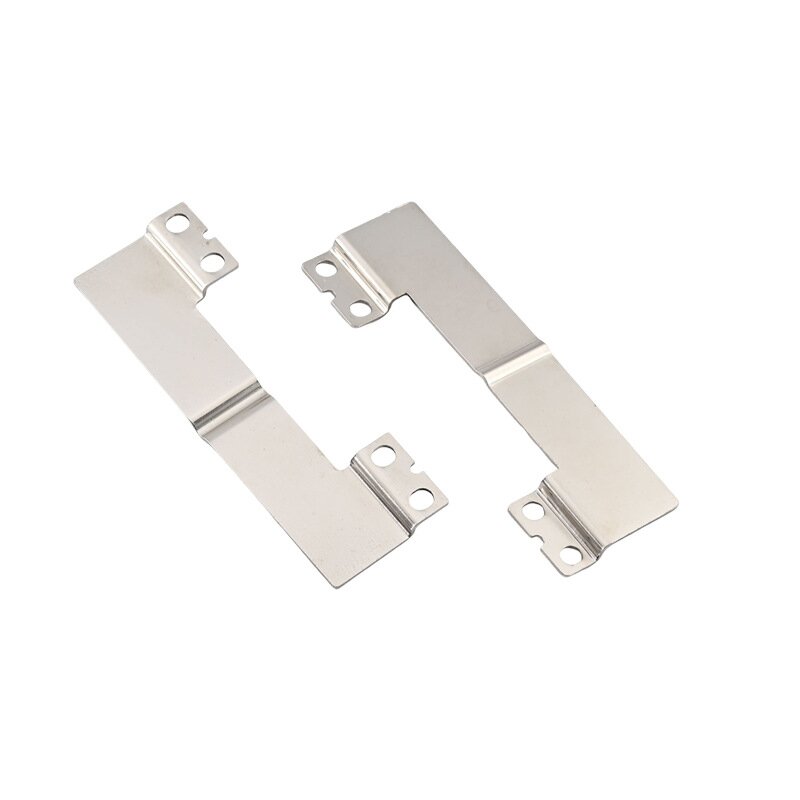
Welded and assembled metal housings often pass prototype inspection and then fail in production—leaks at seams, wall-thickness variation, or cracking after vibration. For automotive and industrial OEMs, the root cause is usually the enclosure construction, not the supplier’s effort. Deep drawn metal housings remove weld lines and assembly gaps from the primary containment boundary, making sealing and dimensional consistency part of the forming process rather than a post-process inspection problem.
Why Deep Drawing Beats Welded Housings
Deep drawing forms a flat blank into a seamless hollow body using a punch, die, and blank holder. Material flow is controlled to produce a one-piece housing with:
No weld seam — a continuous barrier for IP67/IP68 sensor and EV enclosures.
Uniform wall thickness — commonly 0.15–3.0 mm, with critical dimensions held to ±0.01 mm where required.
Better vibration resistance — no heat-affected zone to crack under cyclic loading.
Lower total cost at volume — welding, leak testing, and rework are removed from the process chain.
The right comparison is not “stamping price vs. drawing price.” It is the fully loaded cost of a leak-free, dimensionally stable housing delivered to the line.
Where Deep Drawn Housings Fit
Automotive: sensor shells (ABS, oxygen, NOx, temperature), solenoid housings, motor cans, and EV power-electronics enclosures. Post-draw piercing instead of pre-piercing helps preserve concentricity in sensor bodies.
Industrial: pressure regulator bodies, solenoid valve sleeves, motor shrouds, and instrumentation enclosures. Stainless steel grades are specified for moisture, food-processing, and outdoor environments; heavier gauges support pressure and impact resistance.
5 Checks Before You Order Tooling
Deep draw tooling is built to a specific forming route, so switching suppliers mid-program is expensive. Verify these before placing a PO:
Written DFM review before tooling. The supplier should flag depth-to-diameter severity, corner radius limits, and wall-thinning zones—not after dies are cut.
In-house tool and die capability. Outsourced die construction adds coordination layers and slows correction loops during tryout.
Deep-draw-specific defect controls. Ask how blank holder force, lubrication, and in-process dimensional checks control wrinkling, tearing, and uneven wall thickness.
Quality documentation. ISO 9001:2015 is the baseline; automotive programs need FAI, material certificates, and PPAP-aligned documentation.
Secondary operations and finishing. Passivation, plating, and coating are often required. A partner who manages qualified processors removes a sourcing burden from your team.
How Hony Tai Supports OEM Deep Draw Programs
Hony Tai specializes in customized metal structural components, combining deep drawing, metal stamping, sheet metal fabrication, and precision mechanical machining in one production system. We work from customer drawings and samples, review manufacturability before tooling, and control precision and production quality through mature forming technology and advanced equipment.
Our scope covers deep drawn housings and shells, in-house tooling and process development, secondary machining, finishing coordination, and inspection documentation suited to OEM supply chains. We serve automotive and industrial customers with reliable products, stable delivery, and cost-effective solutions—under a quality-oriented, customer-first approach.