
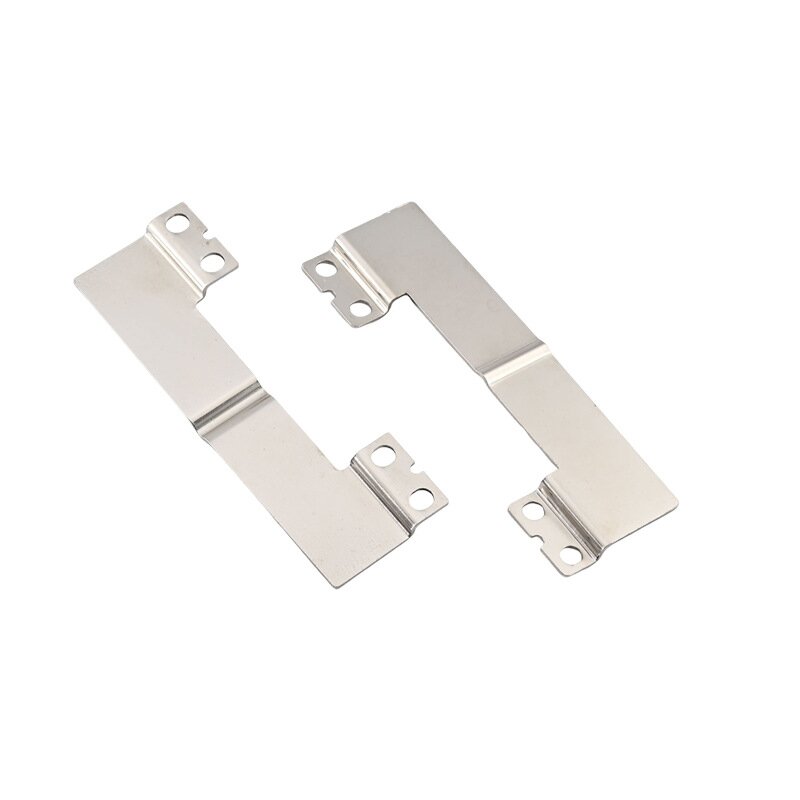
Every stamped fastener — clip, bracket, washer, cage nut — is only as good as the die behind it. Your quote largely reflects tooling decisions made before the press ever runs. It is also where most sourcing mistakes hide: a progressive die quoted for 2,000 pieces, a prototype die pushed into mass production, or die clearance set for mild steel that fails on stainless. Here is what actually drives fastener stamping cost, quality, and delivery.
Match the Die to Your Volume
Three die types dominate fastener stamping, and choosing wrong is expensive.
Single-station dies do one operation per stroke. They suit prototypes, low volumes under roughly 10,000 pieces per year, and simple blanks or one-bend tabs. Tooling cost is low, but per-part handling cost rises quickly with volume.
Compound dies pierce and blank in one press stroke at one station. For flat fasteners — washers, flat brackets, simple clips — they deliver excellent hole-to-edge accuracy and flatness at medium-to-high volumes. They cannot handle complex multi-bend forming.
Progressive dies feed coil strip through sequential stations, adding features each stroke until a finished part exits. They become economical above roughly 50,000–100,000 parts annually, where speed and automation absorb the higher tooling investment. Below that, a progressive die is cost you may never recover.
Practical rule: below 10,000 pieces, resist the progressive-die upsell. Above 50,000, single-station handling will quietly erode your margin.
Tool Steel, Clearance, and the Tolerance Trap
Die life and part precision are decided before machining — in steel selection and heat treatment. Premium tool steels such as SKD11, DC53, and D2 are standard for production fastener dies; carbide inserts are specified where wear resistance is critical. Vacuum quenching and controlled heat treatment to HRC 58–62 are non-negotiable for dies expected to run millions of strikes. Die steel is not where you accept a “commercial equivalent.”
Die clearance is the other hidden variable. Cut-edge quality, burr formation, and die wear all trace back to clearance as a percentage of material thickness. Stainless fasteners work-harden aggressively and need tighter, more deliberate clearance than mild steel. A supplier who cannot explain their clearance strategy for your alloy is quoting a part they do not fully understand.
Tolerance discipline matters just as much. Precision stamping can reach ±0.025 mm, but every tightened tolerance raises tooling cost, adds inspection, and shortens die life. The most expensive fastener programs are rarely the tightest-tolerance ones — they are the ones with unnecessary tight tolerances on features that do no locating or mating work.
Where the Money Actually Goes
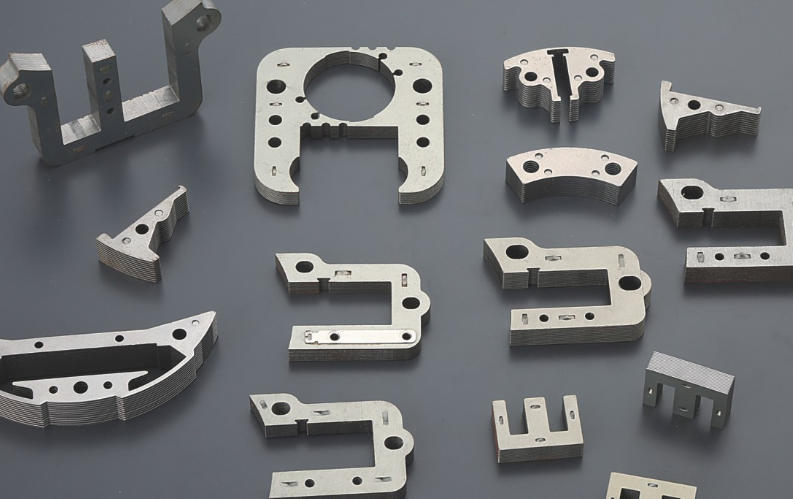
Custom production-grade progressive dies typically carry an upfront investment of $15,000–$65,000+, with piece prices falling to $0.05–$0.85 at volumes above 10,000. Low-volume stage or laser-hybrid tooling may run $1,500–$4,500, with piece prices of $1.80–$6.50 — viable for validation, not production economics.
The upfront number is only part of the equation. A die that produces inconsistent bend angles, generates burrs requiring secondary deburring, or fails under stainless work-hardening adds cost in rework, sorting, freight, and downtime long after the tooling invoice is paid. True cost = die cost + every non-conforming part it will ever produce.
A Practical Supplier Screen
Move past the certificate wall and verify behavior.
Ask for die architecture reasoning, not just a quote. A capable supplier explains why they recommend compound versus progressive for your volume and geometry, and flags DFM concerns — bend radii, hole-to-edge distance, grain direction, tolerance stacking — before quoting.
Verify the quality system against your part. ISO 9001:2015 is the industrial baseline. Automotive fastener programs should expect IATF 16949 and PPAP discipline; aerospace and defense require AS9102 first-article reporting. Confirm the certificate scope covers your process and part type.
Request capability data and corrective-action records. For critical dimensions, Ppk on at least 300 parts and ongoing Cpk monitoring separate a controlled process from an inspected one. Read two closed 8D reports: strong ones name a mechanical root cause; weak ones blame retraining.
Confirm in-process monitoring. Electronic press monitoring, in-die sensing for misfeed and broken punches, and calibrated CMM or optical verification catch drift before a shipment is built.
What to Send With Your Fastener RFQ
Include the 2D drawing with revision number, 3D model for complex geometry, material grade and thickness, critical tolerances and functional interfaces, finish and corrosion requirements, prototype and annual quantities, and inspection documentation expectations. If a flat pattern exists, send it — it shortens strip-layout engineering and improves quote accuracy.
Hony Tai builds custom stamping dies and runs production for industrial fastener components — clips, brackets, washers, and non-standard hardware — from its Shenzhen tooling and press floor. We handle metal stamping, deep drawing, sheet metal fabrication, and precision machining, with strict control over precision, quality, and delivery.
Send your drawing and annual volume forecast. We will reply with a die-type recommendation, a tooling and piece-price breakdown, and a DFM note on anything in the geometry that affects cost or die life.