

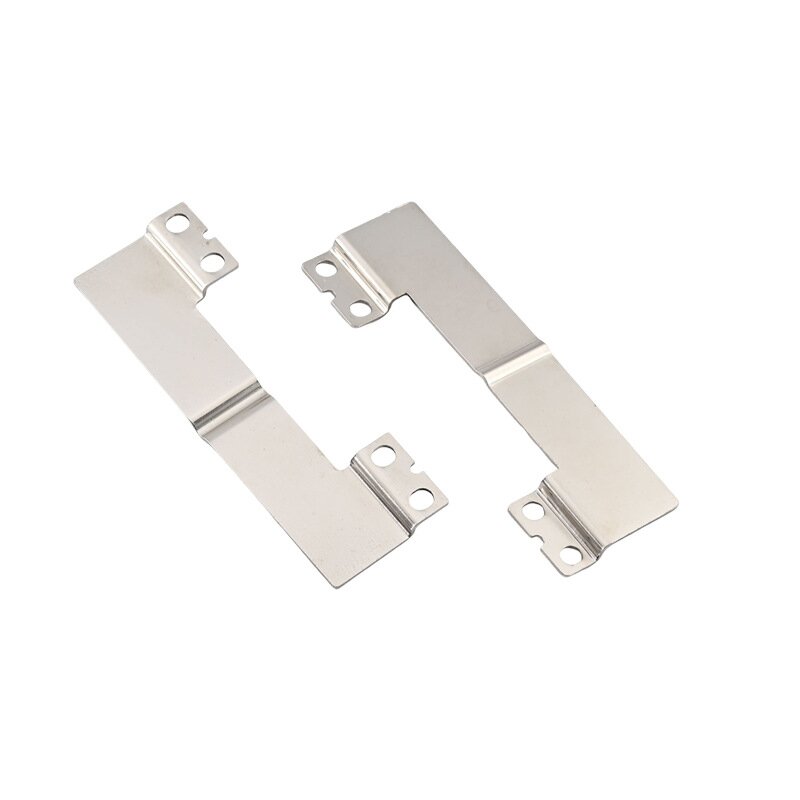
Most buyers sourcing deep drawn metal components spend weeks comparing quotes — and still end up with a supplier that misses tolerances, delays delivery, or quietly shifts production to a subcontractor. The problem usually starts before the RFQ is sent. Three recurring mistakes account for the majority of bad sourcing decisions in this category. Each one is avoidable, and each one is worth fixing before your next project goes out for quote.
Mistake #1: Treating "ISO 9001 Certified" as the Finish Line
A certificate is a filter, not proof of capability. What matters is whether the certification scope covers the specific process you are buying — deep drawing, multi-stage forming, secondary machining — and whether the supplier can produce the records behind the certificate on demand.
Ask for these three documents before awarding a job:
A recent first article inspection (FAI) report for a part with geometry similar to yours. If the supplier cannot produce one, the quality system may exist on paper but not on the floor.
Process capability data (Cpk/Ppk values) on critical dimensions. For industrial stamping, a Cpk of 1.33 on critical features is a reasonable threshold. If no capability data exists, dimensional consistency at volume is unproven.
A closed corrective action report. Read it. Strong programs identify a specific mechanical or process root cause. Weak ones list "retraining" on nearly every report, which usually means the process itself was never corrected.
Mistake #2: Ignoring Tooling Ownership Before the First PO
Tooling is often the largest single line item in a deep drawing program. Who owns the die determines who controls your supply chain for the life of the part.
Two common arrangements exist. Under customer-owned tooling, you pay a one-time tooling fee, the supplier stores and maintains the die, and you can move the tool to another supplier if needed. Under supplier-owned tooling, the die belongs to the manufacturer — which gives them pricing leverage in every future negotiation and makes switching suppliers impractical.
This is not a minor contractual detail. If your current supplier owns the tool and you want to change vendors, you will need to budget for new tooling from scratch. Clarify ownership in writing before the first purchase order, not after.
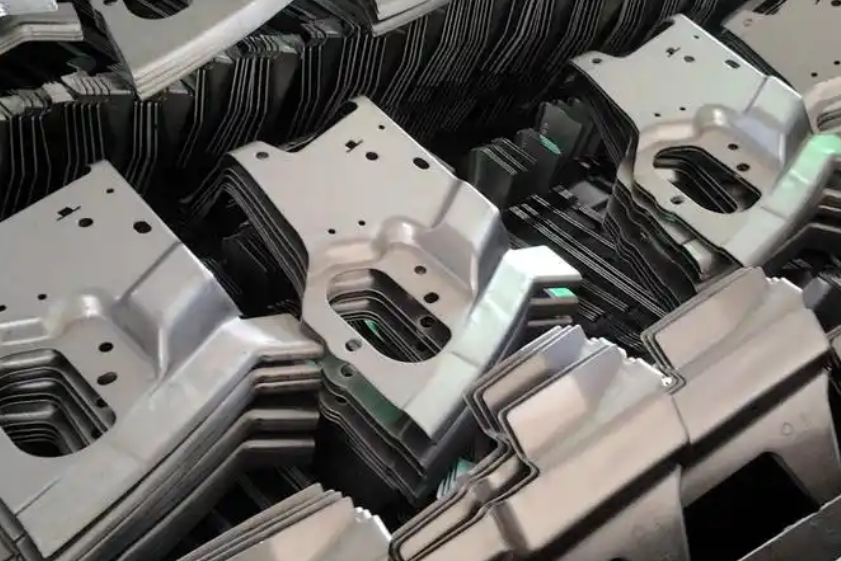
Mistake #3: Sending the RFQ Before a DFM Review
DFM is the step between receiving your drawing and quoting a tool. It answers one question: can this part be made reliably, at your volume, at a sensible cost — and if not, what has to change?
Skipping DFM is expensive. A radius that is too tight, a wall that thins below specification, or a hole placed too close to a bend line is a line change at the DFM stage and a tool modification after the die is cut. Suppliers with in-house tooling engineering typically run a drawing feature by feature and report what each one does to tooling cost, cycle time, and scrap risk.
A useful DFM response will flag three things: the proposed process route (single-stage draw, multi-stage transfer, progressive die), the draw severity relative to your depth-to-diameter ratio, and any tolerances the process cannot hold without a secondary operation. If a supplier quotes without raising any of these points, they may be planning to "make it work" on the floor — which rarely ends well at volume.
What a Factory-Direct Deep Drawing Partner Actually Provides
Hony Tai is a custom metal fabrication manufacturer operating as a direct factory partner. We specialize in deep drawing, metal stamping, sheet metal fabrication, and precision mechanical machining, working from customer drawings and samples to produce standard and non-standard hardware components.
What this means for buyers:
DFM review before quoting. Send a controlled 2D drawing, a 3D model, or a clear image with material, annual volume, and any critical-to-function dimensions. We review manufacturability before committing to a tool, and we tell you if stamping is the wrong route for your part.
One roof for tooling, forming, and inspection. Tooling design and build are handled in-house, which keeps the engineering team that signs off the drawing accountable for the first article.
ISO 9001 quality controls. Incoming material verification, in-process monitoring, and final dimensional inspection are documented per lot. First article inspection is standard on new programs.
Send Your Drawing for a DFM Review
The fastest way to get a useful answer is to send the drawing, material grade, annual quantity, and any functional tolerances you cannot relax. If the file set is incomplete, we will tell you what is missing rather than guess.