

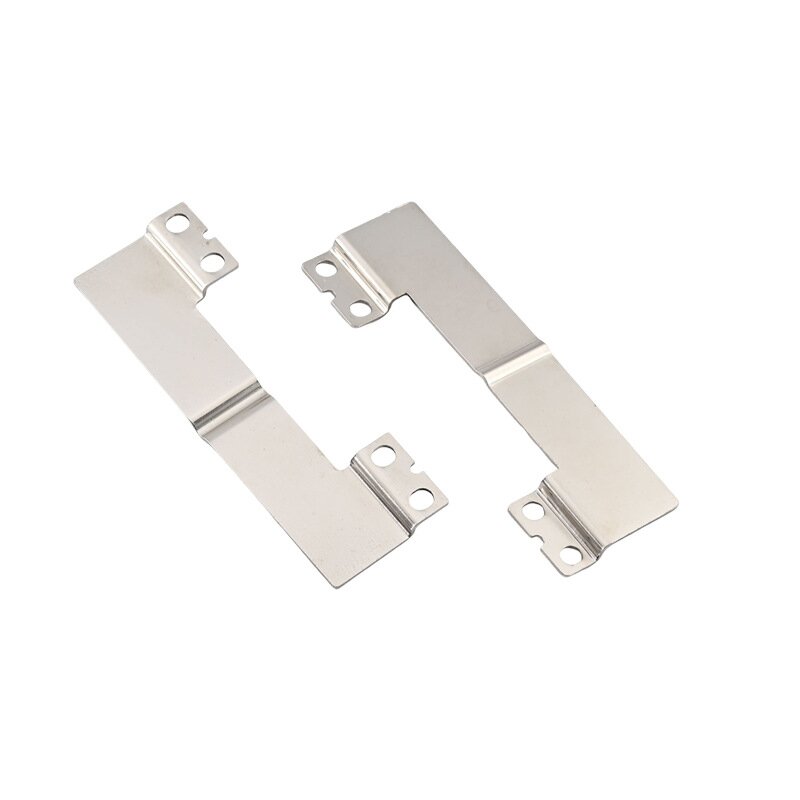
Metal stamping is a high-volume, cost-effective forming process widely used in automotive, electronics, home appliance and hardware industries. Even with mature progressive dies and automated presses, stamping defects still appear frequently, leading to scrap, rework, delayed delivery and customer quality complaints.
Most stamping problems come from four core variables: raw material fluctuation, die condition & clearance, process parameters and lubrication. This article sorts out the most frequently seen stamping defects, explains how to recognize them visually, analyzes root causes and shares practical, factory-professional solutions for stamping engineers, quality managers and sourcing buyers.
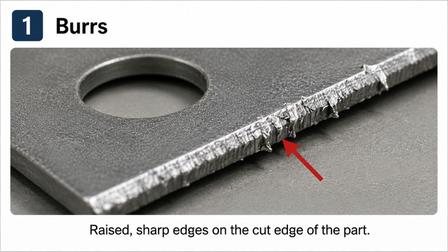
Burrs
What it looks like: Sharp, raised metal fragments, rough torn edges on blanking, piercing or trimming cuts. Burr height is the key inspection indicator.
Root Causes
- Incorrect punch-die clearance (too large or uneven clearance)
- Worn, chipped or dull cutting edges on punch and die inserts
- Poor die alignment, guide bushing wear
- Material hardness variation, inconsistent sheet thickness
- Insufficient or improper stamping lubricant
Professional Solutions
- Set clearance according to material type and thickness; for carbon steel, standard blanking clearance is 5%–10% of material thickness per side
- Establish regular die sharpening schedule; grind cutting edge timely once burr height exceeds tolerance
- Check guide pins, guide bushes and die parallelism during die setup
- Optimize lubrication: use proper stamping oil to reduce friction and tool wear
- Add deburring station (brush, tumble or electrochemical deburr) for cosmetic or assembly parts
2. Cracking / Tearing
What it looks like: Visible splits, micro-cracks or tearing at bend corners, deep drawing bottom radius, stretch flanges. Cracks usually start at the outer fiber where tensile stress reaches the material forming limit.
Root Causes
- Bend radius too small, stress concentration at sharp corners
- Material ductility insufficient; wrong material grade (low elongation)
- Bending across the rolling grain direction
- Excessive blank holder force restricting material flow in deep drawing
- Work hardening from previous stamping operations
- Poor edge quality (pre-existing burrs) acting as crack initiation points
Professional Solutions
- Increase fillet radius; general rule: inner bend R ≥ 2~4 × material thickness
- Adjust bending direction to bend along the material grain instead of cross grain
- Switch to higher elongation material; use low-carbon steel or soft-temper aluminum for deep drawing
- Reduce blank holder force properly and add draw beads to control uniform material flow
- Add intermediate annealing for heavy forming parts to release work hardening
- Remove burrs from pre-cut blank edges before forming
3. Wrinkling
What it looks like: Unwanted folds, ripples and waves on flanges, side walls or drawn surfaces, typical in deep drawing and stretch forming. Wrinkling is caused by compressive buckling.
Root Causes
- Insufficient or uneven blank holder pressure
- Too much material flowing into the die cavity
- Improper draw bead layout or missing draw beads
- Blank shape & nesting design unreasonable
- Material thickness variation and uneven lubrication
Professional Solutions
- Adjust blank holder force to balance tension and compression; avoid over-restricting material flow
- Add or reposition draw beads to control local material feeding speed
- Optimize blank outline by trimming excess material at high-risk wrinkling zones
- Use FEA forming simulation before die trial to predict wrinkling risk
- Keep consistent lubrication on the blank holder surface
4. Springback
What it looks like: After the press opens, the bent or formed part rebounds partially back to its original flat shape. Bend angle opens up, radius changes, resulting in out-of-tolerance dimension and assembly mismatch. Springback is an unavoidable elastic recovery behavior of metal.
Root Causes
- High yield strength material (stainless steel, high-strength steel) has severe springback
- Large bend radius / small bend angle
- Low forming pressure, no coining action
- Material grain direction and thickness inconsistency
- Unstable press tonnage and die deflection
Professional Solutions
- Apply over-bending (under-bend the angle to compensate rebound)
- Add coining / restrike station at the bottom dead center to compress bend zone
- Design springback compensation into die surface during CNC machining
- Use bottoming bending instead of air bending for tight tolerance parts
- Use FEA springback simulation to pre-compensate die geometry
5. Scratches & Line Marks
What it looks like: Continuous or intermittent linear abrasion marks, sliding traces on the part surface, harmful for cosmetic parts and coating quality.
Root Causes
- Rough die cavity surface, polishing marks
- Metal chips, iron powder, dust trapped between die and sheet
- Poor lubrication, dry sliding between material and die
- Sharp transition profile on die surface
- Coating peeling off from aluminum or galvanized sheet
Professional Solutions
- Mirror polish forming inserts and hard chrome / DLC coating for sliding surfaces
- Add air blow cleaning system to remove iron powder and debris during continuous stamping
- Upgrade lubricant type and adjust oil spray position
- Smooth die transition radii to avoid sharp sliding contact
- Use protective film for high-gloss exterior panels
6. Galling / Material Pick-up
What it looks like: Material transfers and sticks onto die surface, then transfers back to workpiece, forming lump marks, scoring and surface damage. Galling happens frequently when forming aluminum, stainless steel and galvanized steel.
Root Causes
- Direct metal-to-metal adhesion under high contact pressure
- Uncoated die steel, low surface hardness
- Lack of lubrication or lubricant breakdown
- High local contact pressure on small radii
Professional Solutions
- Apply surface treatment: TiN, TiCN, DLC coating on forming inserts
- Use powder metallurgy high-hardness die steel with good anti-galling performance
- Use solid lubricant or film lubrication for aluminum and stainless stamping
- Optimize contact pressure distribution by enlarging contact radius
- Regular die cleaning to remove accumulated adhered material
7. Warpage & Distortion
What it looks like: Parts twist, bow or lose flatness after stamping; flatness out of tolerance, hard to assemble.
Root Causes
- Uneven residual stress released after forming
- Asymmetric part geometry, unbalanced material flow
- Uneven trimming force, one-sided cutting
- Material internal stress from coil slitting
- Uneven cooling after stamping
Professional Solutions
- Add flattening / leveling station in progressive die
- Symmetrize forming sequence and cutting layout
- Stress relief leveling of raw coils before stamping
- Optimize trimming sequence to avoid one-sided sudden release
- Add fixture for controlled cooling after forming
Quick Reference Table of Stamping Defects
表格
| Defect | Main Process | Core Check Item |
|---|---|---|
| Burrs | Blanking, piercing, trimming | Clearance, cutting edge sharpness, alignment |
| Cracking | Bending, deep drawing | Bend radius, material elongation, blank holder force |
| Wrinkling | Deep drawing | Blank holder force, draw bead, blank shape |
| Springback | Bending, forming | Material yield strength, over-bend, coining |
| Scratches | Forming, drawing | Die surface finish, chip cleaning, lubrication |
| Galling | Aluminum / stainless forming | Die coating, lubricant, contact pressure |
| Warpage | All processes | Residual stress, cutting sequence, leveling |
General Preventive Strategy for Stamping Quality
- Upstream control: Verify material certificate, grain direction, thickness and surface condition before production.
- Die trial with simulation: Run FEA forming simulation before die manufacturing to catch wrinkling, cracking and springback risks.
- Standardize process sheet: Record press tonnage, stroke speed, lubrication volume, blank holder pressure for batch consistency.
- Scheduled die maintenance: Sharpen, polish, clean and coat dies regularly instead of fixing after defects explode.
- SPC online monitoring: Track burr height, bend angle and dimension variation for early warning.
Conclusion
Stamping defects are rarely caused by a single factor. When troubleshooting, engineers should first identify the defect appearance, then check material, die condition, clearance, lubrication and forming parameters step by step. With proper die design, compensated springback control, stable lubrication and preventive maintenance, scrap rate can be greatly reduced and stamping part quality stabilized for long-run mass production.